
Does Banya Help You Sleep?

One of the most common things we hear at Banya No.1 – Hoxton is: “I always sleep incredibly well after.” It sounds anecdotal – but there is both cultural tradition and physiological science behind this experience.
So, does sauna actually improve sleep? And is deep sleep after banya something historically expected – or just a coincidence?
How Heat Prepares the Body for Sleep
When you spend time in a hot steam room, your core body temperature rises and blood vessels dilate. Muscles relax, circulation increases, and physical tension begins to drop. That part is obvious.
Repeated sauna exposure has also been associated with improved cardiovascular health and stress reduction³, both of which indirectly influence sleep quality.
What matters most happens afterwards. As your body cools down, core temperature falls. This drop is one of the signals your brain naturally uses to initiate sleep. Under normal circumstances, body temperature declines gradually in the evening as part of the circadian rhythm. After sauna, that cooling effect becomes more distinct.
Research¹ on passive body heating (including sauna and warm bathing) shows improvements in:
- Time needed to fall asleep
- Overall sleep efficiency
- Depth of slow-wave (deep) sleep
- Subjective sleep quality¹
The mechanism appears to be thermoregulation: heat followed by controlled cooling enhances the body’s natural sleep preparation process².
In other words, the body experiences a clearer transition from activation to rest.
The Hot • Cold • Rest • Repeat Routine

Traditional Russian banya is not just heat. It follows a deliberate rhythm: hot–cold–rest–repeat.
Each phase has a specific physiological role:
- Hot phase: increases circulation, raises core temperature, relaxes muscles
- Cold phase: briefly activates the stress response and sharpens circulation
- Rest phase: allows the nervous system to shift into recovery mode
When this cycle is repeated two or three times, the body moves more efficiently from stimulation into parasympathetic dominance – the state associated with recovery, digestion and sleep readiness.
Cold exposure, when brief and properly managed, often produces a rebound calm effect⁴. The key is not intensity, but contrast followed by genuine rest.
By the final rest period, many people feel physically heavy, mentally quieter and ready to sleep.
Is Sleeping Well After Banya a Tradition?
Yes – culturally, deep sleep after banya has long been expected.
Historically, sessions were often done in the evening and followed by tea and quiet time. The ritual was not rushed. Heat relieved muscular tension, venik massage stimulated circulation, cold immersion refreshed the system, and structured rest allowed the body to settle fully.
The traditional benefits associated with banya included:
- Physical lightness
- Emotional release
- Reduced tension
- Deep, uninterrupted sleep
Deep sleep was not advertised as a feature. It was considered a natural outcome of the process.
Why Banya May Feel Stronger Than a Standard Sauna

A Russian banya typically differs from a short dry sauna visit in several ways:
- Higher humidity
- Rhythmic steam bursts rather than constant heat
- Parenie Ritual (traditional venik massage) stimulating circulation and lymphatic flow
- Integrated cold immersion
- Structured rest intervals between rounds
Those rest intervals are crucial. Without rest, the nervous system remains stimulated. With proper rest, the body transitions into recovery.
This is often why people describe post-banya sleep as “deeper” or more restorative compared to sleep after exercise alone.
Who May Notice the Biggest Changes?
Sleep improvements are often most noticeable in people who:
- Carry chronic stress
- Struggle to switch off mentally
- Experience muscular tension
- Have mild sleep disturbances
- Train intensely and need recovery support
When tension drops and the nervous system recalibrates, falling asleep can become easier and sleep can feel more restorative.
Banya is not a treatment for severe insomnia and should not replace medical care. However, as part of a regular evening wellness routine, the hot–cold–rest–repeat structure aligns closely with the body’s natural sleep preparation mechanisms.
The Ritual at Banya No.1 – Hoxton

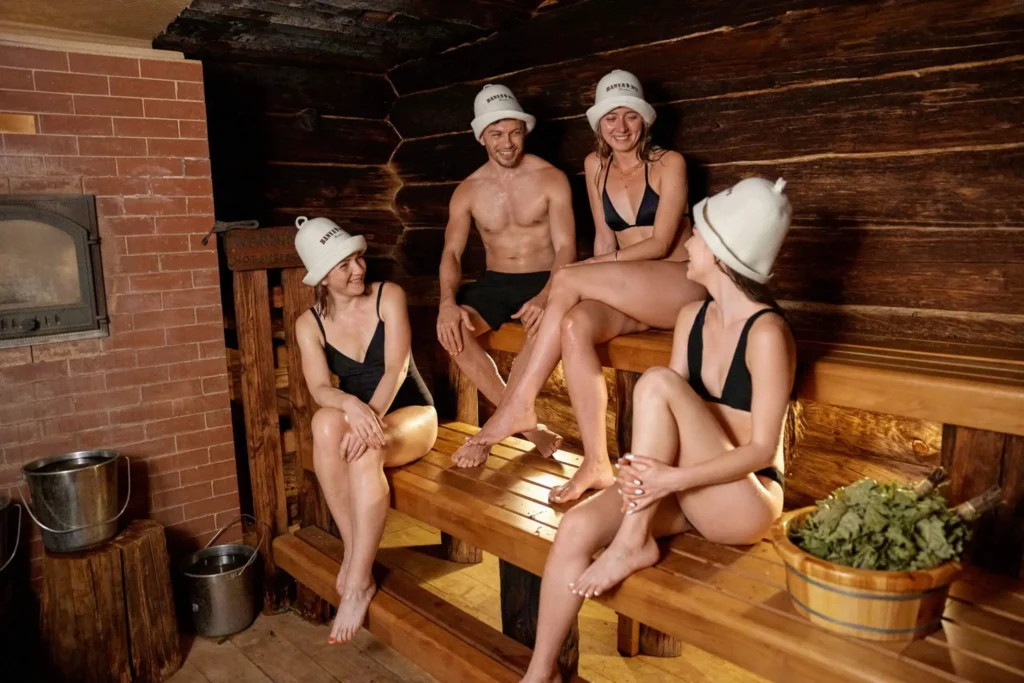
At Banya No.1 – Hoxton, sessions follow this traditional rhythm: steam, cold plunge, rest and repeat. The structure is designed not only for circulation and detoxification, but also for recovery.
Many guests tell us they fall asleep faster and wake feeling more refreshed after a visit. Sometimes the body simply needs contrast – and then stillness.
References
- Horne JA, Reid AJ. Night-time sleep EEG changes following body heating. Electroencephalography and Clinical Neurophysiology. 1985.
- Haghayegh S et al. Passive body heating before bedtime improves sleep: systematic review and meta-analysis. Sleep Medicine Reviews. 2019.
- Laukkanen T et al. Association between sauna bathing and cardiovascular events. JAMA Internal Medicine. 2015.
- Leppäluoto J et al. Effects of long-term cold exposure on hormonal response. International Journal of Circumpolar Health. 2008.