
Health Benefits of Sauna: What the Science Actually Says

Regular Finnish-style sauna bathing is more than a relaxing ritual – over the last decade, it’s been studied as a lifestyle practice linked with better cardiovascular health, potential brain benefits, and improved recovery when used sensibly. Below we cut through the hype and focus on what’s actually supported by evidence, how a traditional sauna differs from a steam room, where Russian banya sits on that spectrum, what sauna temperature for health benefits usually means in research, and how to build a safe routine in London’s Banya tradition.
How heat bathing affects your body
A Finnish sauna is typically 80–100 °C with low humidity (around 10–20%). Heat triggers vasodilation and sweating, so heart rate rises and blood vessels open, temporarily mimicking a light-to-moderate workout. Over time, these adaptations are thought to improve endothelial function and help lower blood pressure – a plausible basis for the widely discussed health benefits of sauna and advantages of sauna.
Where Russian banya fits (and why it feels different)

Russian banya uses higher humidity than a dry sauna – typically 40–60% relative humidity – while keeping the air hot, usually 70–100 °C. Because humid air reduces sweat evaporation, the same thermometer reading feels more intense than in a dry room. In practice, banya sessions may be shorter per round but deliver a stronger heat load, which is why many guests alternate heat with cool-downs. The Parenie Ritual briefly increases convective heat transfer at the skin, enhancing the sensation of warmth and promoting relaxation – another reason to ease in, hydrate, and listen to your body.
Traditional sauna benefits vs steam
Steam rooms run at ~43 °C with near-100% humidity, so the air feels very different despite a lower number on the dial. Both offer warmth-induced relaxation and temporary nasal decongestion for some people, but the long-term evidence base is far stronger for Finnish dry sauna than for steam. This matters when people compare sauna v steam room benefits or talk about the benefits of sauna and steam room – most outcome data comes from Finnish saunas. Banya sits between these two: hotter than steam, more humid than dry sauna, and experienced by many as a balanced “heavy warm” rather than a dry blast.
Sauna and heart health
If you’re looking for sauna and heart health (or sauna for heart health) data, Finland’s large prospective cohorts are the anchor. In middle-aged adults, more frequent sauna use (for example, 4–7 times per week) has been associated with lower risks of sudden cardiac death, fatal coronary heart disease, cardiovascular mortality and even all-cause mortality. Associations strengthened with session duration as well as frequency. These are observational links, not proof of causation, but the dose–response pattern is notable.
Frequent sauna use has also been associated with a lower risk of developing hypertension, a plausible pathway for longer-term cardiovascular benefits. Adding sauna habits to standard risk factors can modestly improve prediction of cardiovascular mortality in risk models. Mechanistically, repeated heat exposure may improve endothelial-dependent dilation, reduce arterial stiffness and systemic inflammation – all consistent with the epidemiology, while experimental work continues.
Brain & cognitive health
One Finnish cohort reported that men who used a sauna more frequently had lower incidence of dementia and Alzheimer’s disease over long follow-up. Mechanisms could include vascular benefits, reduced inflammation and improved sleep. Causality hasn’t been established and generalisability beyond the studied population still needs more work, but this is a promising line of research within the broader benefits of Finnish sauna.
Respiratory health & colds
People often ask whether sauna benefits include “fighting a cold”. Evidence is mixed and mostly small-scale. A randomised trial of inhaling hot, dry sauna air did not meaningfully change overall symptom severity in the common cold, and reviews of heated humidified air (steam) reach similarly cautious conclusions. Sauna may feel soothing, but it’s not a treatment for colds – a useful nuance when discussing the benefits of sauna and steam room.
Recovery, performance and the advantages of sauna for active people
Beyond relaxation, heat can act as a training adjunct. In runners, several weeks of post-exercise sauna improved endurance performance, likely via increased plasma and total blood volume (randomised crossover design). Follow-up work suggests intermittent post-exercise sauna can improve heat tolerance and support some training adaptations. This supports benefits of regular sauna use for perceived recovery, with the usual caveats about individual response and hydration. In a banya context, higher humidity means you may reach the same perceived intensity in a shorter exposure; plan your rounds accordingly.
Sauna good for skin?
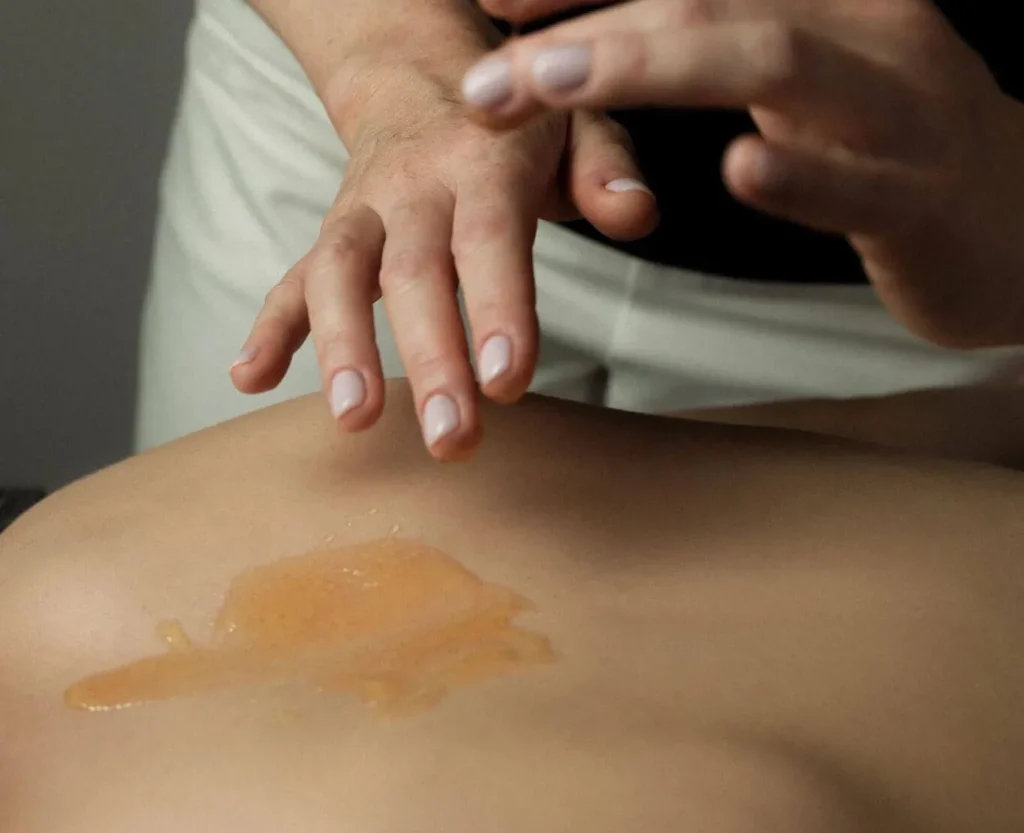
Small controlled dermatology studies suggest regular sauna can support epidermal barrier function and stratum corneum hydration, aligning with that familiar “post-sauna glow”. As ever, hydrate and moisturise after sessions, and be mindful if you have dermatologic conditions that flare with heat. Some guests find that the gentle exfoliation implicit in Parenie Ritual complements these traditional sauna benefits.
Sauna & cold plunge benefits (hot–cold cycles)

Pairing heat with a cold plunge is traditional – and popular. In sport settings, cold-water immersion shows modest recovery benefits over 24–72 hours for some outcomes, while the added value of contrast water therapy versus cold alone is inconsistent. At the same time, sudden cold-water immersion can provoke an “autonomic conflict” and arrhythmias in susceptible individuals; those with cardiovascular disease should be cautious and favour gradual cooling. Use this pairing for the ritual and short-term recovery – not as a cure-all. These points are central when discussing sauna and cold plunge benefits.
Safety first: who should be careful
For most healthy adults, sauna bathing is well tolerated. Classic clinical guidance lists key contraindications: unstable angina, recent myocardial infarction and severe aortic stenosis. Decompensated heart failure or uncontrolled hypertension warrant medical advice first. Avoid alcohol before and after sessions (it increases hypotension and arrhythmia risk). During pregnancy, especially in the first trimester, people are generally advised to avoid saunas and hot tubs due to overheating (hyperthermia) risks. It’s sensible to position this section under sauna side effects and precautions – it builds trust and improves user experience.
How to use a sauna or banya for health (evidence-aligned routine)
- Temperature:
- Finnish dry sauna: usually 80–100 °C with 10–20% humidity – the sauna temperature for health benefits most often referenced in research.
- Russian banya: typically 70–100 °C with 40–60% humidity – expect a stronger perceived heat at the same temperature due to moisture.
- Duration & frequency:
Start with 5–10 minutes, build toward 15–20 minutes per round in dry sauna. In banya, consider slightly shorter rounds at equivalent perceived intensity, especially when adding Parenie Ritual. Include a cool-down between rounds. In cohorts, 3–7 sessions per week were associated with better outcomes – think of this as a direction rather than a prescription. Hydration is essential. - Steam rooms:
Great for relaxation and perceived airway comfort, but long-term outcome data are limited compared with Finnish sauna; position steam as complementary rather than interchangeable when comparing sauna v steam room benefits or the benefits of sauna and steam room.
Experience authentic Banya in London
At Banya No.1 – Hoxton, we deliver traditional sauna benefits in an authentic Russian banya setting: hot room at 70–100 °C, 40–60% humidity, expertly guided Parenie, and optional cool-water immersion as part of a carefully structured ritual. If you’re exploring the health benefits of sauna, want a safe way to unwind after training, or simply need a deeply restorative reset in the city – we’ve got you.
References
- Laukkanen T. et al. (2015) “Association Between Sauna Bathing and Fatal Cardiovascular Events and All-Cause Mortality” – https://jamanetwork.com/journals/jamainternalmedicine/fullarticle/2130724
- Laukkanen T. et al. (2018) “Sauna bathing is associated with reduced cardiovascular mortality and improves risk prediction in men and women” – https://bmcmedicine.biomedcentral.com/articles/10.1186/s12916-018-1198-0
- Zaccardi F. et al. (2017) “Sauna Bathing and Incident Hypertension: A Prospective Cohort Study” – https://academic.oup.com/ajh/article/30/11/1120/3867393 Oxford Academic
- Laukkanen T. et al. (2017) “Sauna bathing is inversely associated with dementia and Alzheimer’s disease in middle-aged Finnish men” – https://academic.oup.com/ageing/article/46/2/245/2654230
- Laukkanen J.A., Laukkanen T., Kunutsor S.K. (2018) “Cardiovascular and Other Health Benefits of Sauna Bathing: A Review of the Evidence” – https://www.mayoclinicproceedings.org/article/S0025-6196(18)30275-1/fulltext
- Laukkanen J.A., Kunutsor S.K. (2024) “The multifaceted benefits of passive heat therapies for extending the healthspan: a comprehensive review with a focus on Finnish sauna” – https://pmc.ncbi.nlm.nih.gov/articles/PMC10989710/
- Hussain J., Cohen M. (2018) “Clinical Effects of Regular Dry Sauna Bathing” – https://pmc.ncbi.nlm.nih.gov/articles/PMC5941775/
- Kirby N.V. et al. (2021) “Intermittent post-exercise sauna bathing improves markers of exercise capacity…” – https://pubmed.ncbi.nlm.nih.gov/33211153/
- Scoon G.S.M. et al. (2007) “Effect of post-exercise sauna bathing on the endurance performance of competitive male runners” – https://pubmed.ncbi.nlm.nih.gov/16877041/
- Lee E. et al. (2018) “Sauna exposure leads to improved arterial compliance: findings from a non-randomised experimental study” – https://pubmed.ncbi.nlm.nih.gov/29048215/
- Singh M. et al. (2017) “Heated, humidified air for the common cold” (Cochrane Review) – https://www.cochranelibrary.com/cdsr/doi/10.1002/14651858.CD001728.pub6/full
- Pach D. et al. (2010) “Does inhaling hot dry air reduce common cold symptoms? A randomised controlled trial” – https://pmc.ncbi.nlm.nih.gov/articles/PMC7168476/
- Hannuksela M.L., Ellahham S. (2001) “Benefits and risks of sauna bathing” – https://pubmed.ncbi.nlm.nih.gov/11165553/
- NHS (UK) – “Saunas, hot tubs and steam rooms in pregnancy” – https://www.nhs.uk/pregnancy/finding-out/health-things-you-should-know-in-pregnancy/
- ACOG – “Can I use a sauna or hot tub early in pregnancy?” – https://www.acog.org/womens-health/experts-and-stories/ask-acog/can-i-use-a-sauna-or-hot-tub-early-in-pregnancy
- Higgins T.R., Greene D.A., Baker M.K. (2017) “Effects of Cold Water Immersion and Contrast Water Therapy for Recovery From Team Sport: A Systematic Review and Meta-analysis” – https://pubmed.ncbi.nlm.nih.gov/27398915/
- Shattock M.J., Tipton M.J. (2012) “‘Autonomic conflict’: a different way to die during cold water immersion?” – https://pmc.ncbi.nlm.nih.gov/articles/PMC3459038/
- Kowatzki D. et al. (2008) “Effect of Regular Sauna on Epidermal Barrier Function and Stratum Corneum Water-Holding Capacity in Humans: A Controlled Study” – https://karger.com/drm/article/217/2/173/111884/Effect-of-Regular-Sauna-on-Epidermal-Barrier
This article is for informational purposes and does not substitute medical advice.